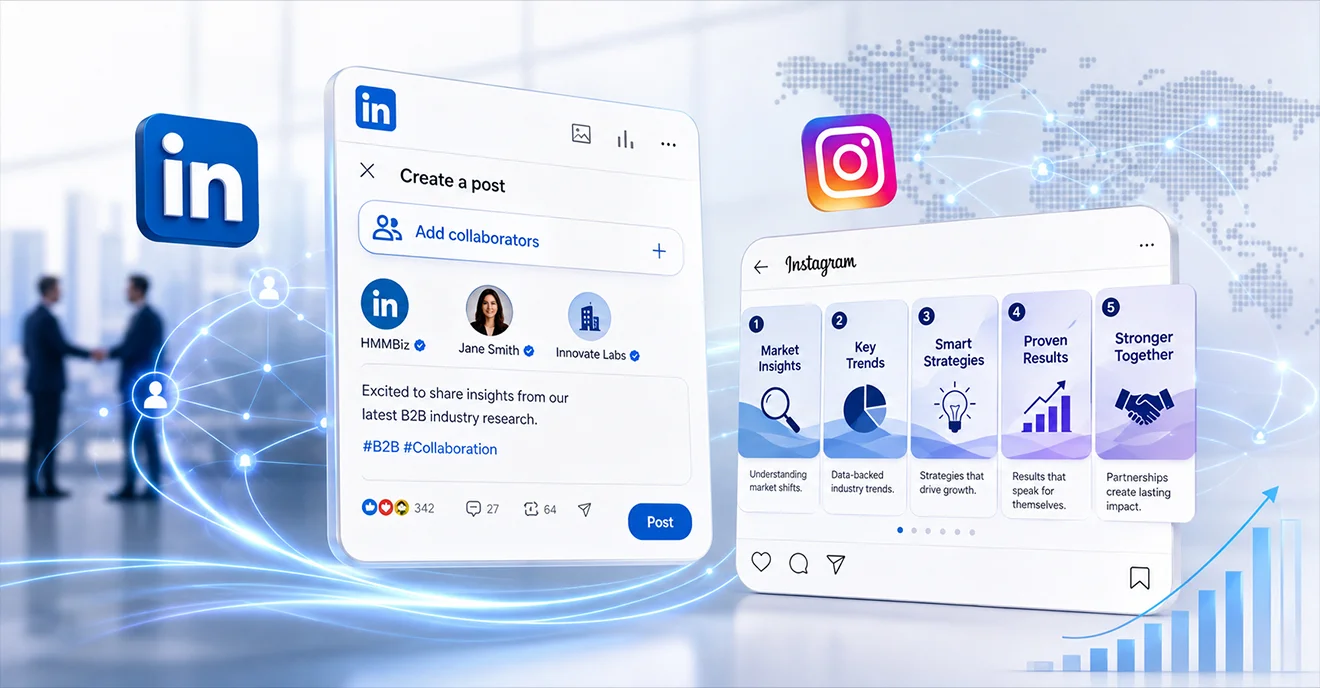












 GPT-powered ticket routing
 Email & WhatsApp inbox
 Sentiment detection
 1-60 min check intervals.
 Email & Google Chat alerts
 Global Checks
 Auto-trains on any URL
 Built-in lead capture
 One-line JS embed

























Google now answers a majority of searches on the results page itself, and the click that used to follow often does not. A Pew Research Center study of US adults found that 58% ran at least one search in March 2025 that returned an AI-generated summary, and that users clicked a traditional link far less often when one appeared (Pew Research Center, 2025). For any business that reads success off an organic traffic chart, the ground has shifted, even though buyer demand has not.
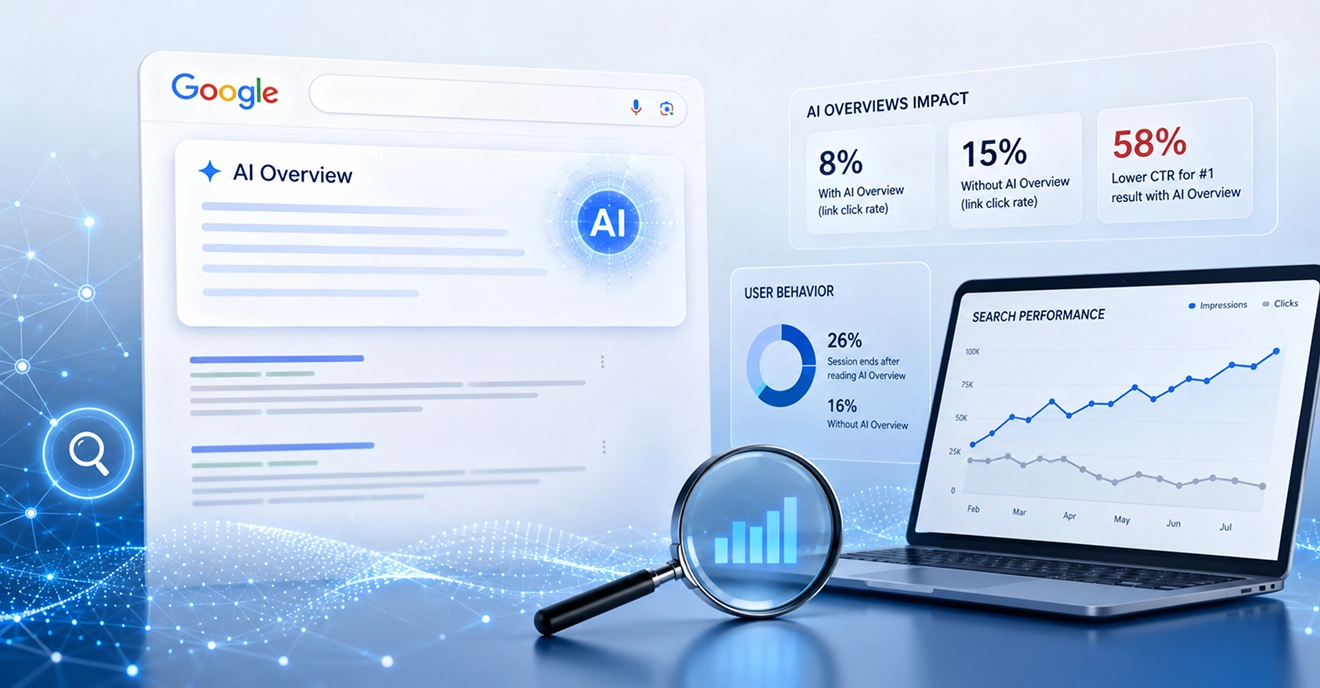
8% vs 15%
traditional-link click rate on Google searches with an AI summary present versus without one (Pew Research Center 2025)
1%
AI-summary searches where the user clicked a link inside the summary itself (Pew Research Center 2025)
58%
lower click-through on the top organic result when an AI Overview appears above it (Ahrefs 2025)
What the Data Actually Shows
The click, not the ranking, is what moved. Pew found users clicked a traditional search result on 8% of pages that carried an AI summary, against 15% of pages that did not, and they clicked a link inside the summary just 1% of the time (Pew Research Center, 2025). People also ended their session more often after reading a summary: 26% of the time versus 16% without one.
Ahrefs measured the same effect from the ranking side, reporting a 58% lower click-through rate for the number-one result when an AI Overview sits above it (Ahrefs, 2025). The position still exists. The traffic it used to send does not arrive in the same volume.
What Changed in How Google Works
Search shifted from a list of links to an answer engine. For years Google sent you elsewhere to read the answer; AI Overviews increasingly resolve the question in place and treat the ten blue links as a footnote. Informational and definitional queries are hit hardest, because those are the questions a summary answers completely.
This is why the drop feels uneven. Pages that explained “what is” and “how does” lose the most clicks, while pages tied to a specific purchase or action hold up better. The searches did not disappear. The reward for ranking on the easy ones did.
Why Your Traffic Looks Worse Than Your Business Is
Here is the trap for business owners: the traffic dashboard fell, so it looks like a marketing failure, when demand for what you sell has not changed. A quieter analytics line can sit on top of a healthy pipeline.
Two numbers usually tell the real story:
- Impressions in Google Search Console stay flat or rise while clicks fall, which means people still see you but read the answer without visiting.
- Conversions and enquiries hold steady even as sessions dip, because the visitors who do click through arrive better informed and more ready to act.
If impressions are up and conversions are steady, the problem is measurement, not demand. Judge the quarter on qualified enquiries, not raw sessions.
Is your traffic really down, or just your dashboard?
HMMBiz reads the full picture across Search Console, analytics and AI citations, then tells you whether to worry or to reallocate.
What to Measure Instead
Clicks alone stopped describing search performance the day AI Overviews scaled. Track a wider set:
- Impressions and average position in Search Console, to confirm visibility is intact even when clicks fall.
- Branded search volume, because being seen inside AI answers lifts the number of people who later search your name directly.
- AI citation share, meaning how often ChatGPT, Gemini and Google’s own AI answers name your business. Our GEO guide covers how to earn those mentions.
- Conversions and lead quality, the metrics a business is actually run on.
For a step-by-step read on separating a real problem from a reporting artefact, see our companion piece on why organic traffic dropped in 2026.
HMMBiz Perspective
HMMBiz works with businesses across five markets that watched organic sessions slide through 2025 and early 2026 while their sales pipelines stayed level. The instinct is to spend more to win back the lost clicks. The better move is usually to re-baseline what success looks like, because a share of those clicks was never going to convert and is not coming back.
HMMBiz rebuilds client reporting around impressions, branded search, AI citations and conversions, so the dashboard measures the business rather than a habit from the pre-AI era of search.
Stop judging search on a metric AI Overviews broke
HMMBiz rebuilds your search reporting around what actually drives revenue, then shows you where to win visibility in both Google and AI answers.
 +1 862-246-6249
Frequently Asked Questions
Do AI Overviews mean my SEO no longer matters?
No. Ranking still decides whether AI answers can find and cite you, since AI Overviews are built from Google’s own index. What changes is the goal: earning a citation and a qualified click rather than counting every click. HMMBiz treats strong technical SEO as the entry ticket and citation share as the new scoreboard.
How long until AI Overviews stabilise and traffic settles?
There is no fixed date, and the format is still expanding across query types through 2026. Treat the shift as permanent rather than a dip to wait out, and re-baseline your reporting now. HMMBiz recommends reviewing search metrics quarterly against conversions instead of month-to-month against raw sessions.
Can I stop Google from using my content in AI Overviews?
Partly, and it involves a trade-off. Google ties AI Overview eligibility to normal Search indexing, so blocking it broadly also risks your ordinary visibility, though controls such as nosnippet and data-nosnippet limit how much text can be shown. Most businesses are better served by earning the citation than by hiding from it. Confirm any indexing change with your technical team before applying it.
Which types of pages lose the most traffic to AI Overviews?
Informational and definitional pages lose the most, because a summary can answer “what is” and “how does” questions completely without a click. Transactional and locally intended pages hold up better, as those searchers still need to reach a specific site or location. Auditing which of your pages sit in each group is the fastest way to size your real exposure.
REFERENCES
1. Pew Research Center – “Google users are less likely to click on links when an AI summary appears in the results” (2025)
2. Ahrefs – “Update: AI Overviews Reduce Clicks by 58%” (2025)
3. Search Engine Journal – “Pew Research Confirms Google AI Overviews Is Eroding Web Ecosystem” (2025)
 In This News
  Share This News