











 GPT-powered ticket routing
 Email & WhatsApp inbox
 Sentiment detection
 1-60 min check intervals.
 Email & Google Chat alerts
 Global Checks
 Auto-trains on any URL
 Built-in lead capture
 One-line JS embed

























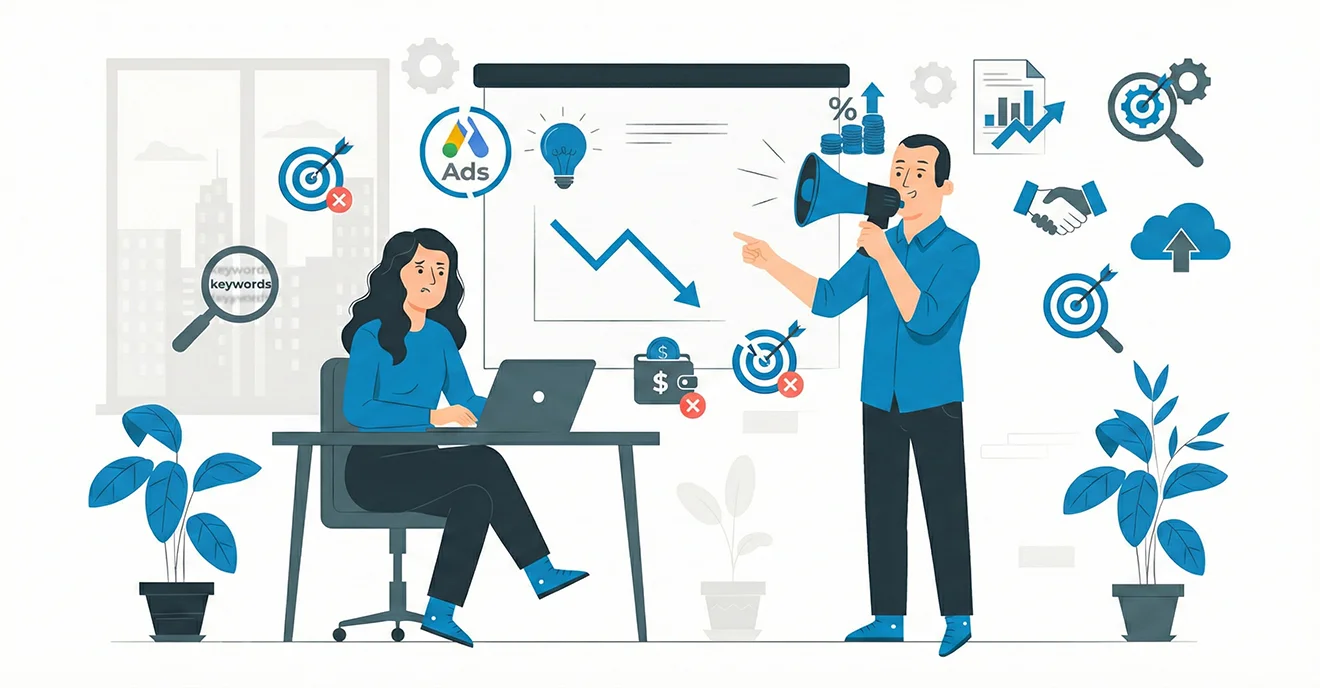
Running Google Ads doesn’t guarantee results. Many businesses spend consistently on ads but struggle to see meaningful returns. A low ROI (Return on Investment) is usually not due to Google Ads itself but due to strategic mistakes in how campaigns are planned, targeted, and optimised.
At HMMBiz Web Solutions, we regularly audit underperforming Google Ads accounts. In most cases, fixing a few common mistakes helps businesses boost ROI by 2–3x without increasing ad spend.
Let’s break down the five most common reasons why your Google Ads ROI might be low and how to fix them.
What Does Google Ads ROI Really Mean?
Google Ads ROI measures how much revenue or value you generate compared to what you spend on ads. A strong ROI means:
- Ads reach the right audience
- Traffic converts into leads or sales
- Cost per acquisition stays under control
Low ROI usually signals misalignment between targeting, intent, messaging, and landing pages.
5 Common Google Ads Mistakes to Avoid
1. Wrong Targeting or Targeting Without Research
One of the biggest mistakes businesses make is launching ads without proper audience and keyword research.
This includes:
- Targeting broad or irrelevant keywords
- Ignoring search intent
- Targeting the wrong geography or demographics
Without research, ads may get clicks—but not conversions.
Fix:
Always base targeting on:
- High-intent keywords
- Buyer behavior
- Search trends
- Business goals
2. Running Ads on “Cold Days” When Demand Is Low
Many businesses run ads continuously without considering search demand patterns.
If people aren’t actively searching for your product or service on certain days, running ads during those periods leads to wasted spend.
Fix:
- Analyse search trends and seasonality
- Adjust bids and schedules based on demand
- Pause or reduce spend during low-intent periods
3. Poor Landing Page Experience
Even the best ads fail if the landing page doesn’t convert.
Common landing page issues:
- Slow loading speed
- Unclear messaging
- Weak call-to-action
- No trust signals
Clicks without conversions directly hurt ROI.
Fix:
- Optimise landing pages for speed and clarity
- Align page content with ad messaging
- Focus on conversion-first design
4. Ignoring Conversion Tracking & Data
Many advertisers track clicks but not conversions properly.
Without accurate tracking:
- You can’t identify what’s working
- Budget allocation becomes guesswork
- Optimisation decisions lack clarity
Fix:
- Set up proper conversion tracking
- Track form fills, calls, purchases, and key actions
- Optimise campaigns based on real performance data
5. No Continuous Optimisation
Google Ads is not a “set and forget” channel.
Common mistakes include:
- Running the same ads for months
- Not testing creatives or keywords
- Ignoring Quality Score and performance trends
Fix:
- Regularly optimise keywords, ads, and bids
- A/B test ad copies
- Pause low-performing elements
How Fixing These Mistakes Improves ROI
When targeting, timing, landing pages, and data align:
- Cost per click reduces
- Conversion rate improves
- Ad relevance increases
- Overall, ROI improves significantly
This is where strategic Google Ads management makes the difference.
We Fix These Mistakes for Our Clients – Here’s One Example
Case Study: Rudraksha Ratna
Rudraksha Ratna, a globally trusted brand with over 20 years of excellence in spiritual products, wanted to boost online sales and scale globally while maintaining brand credibility.
During our audit, we identified common Google Ads issues such as targeting gaps, intent mismatch, and optimisation opportunities. After correcting these and aligning ads with SEO and content strategy, we helped them boost sales by 3x, significantly improving ROI and audience relevance.
Our integrated approach ensured higher traffic quality, better conversions, and stronger brand positioning.
Read about Rudraksha Ratna case study
Ready to stop wasting ad spend and start getting real returns from Google Ads?
Get a free Google Ads audit and ROI-focused consultation.
FAQs
1. Why is my Google Ads ROI low despite high clicks?
High clicks don’t guarantee conversions. Poor targeting, weak landing pages, or low-intent traffic often cause low ROI.
2. How long does it take to improve Google Ads ROI?
With proper optimisation, noticeable improvements can be seen within 2–4 weeks.
3. Should I pause ads during low-demand periods?
Yes. Running ads when search intent is low often wastes budget and reduces ROI.
4. Does SEO help improve Google Ads ROI?
Yes. SEO insights help identify high-intent keywords and improve landing page quality, boosting ad performance.
5. Does HMMBiz manage Google Ads campaigns?
Yes. HMMBiz provides data-driven Google Ads management focused on ROI, not just clicks.
 Table of Contents
  Never Miss a New Article